

-
Antique Items
- Antique Bath Items
- Antique & Vintage Books
- Antique Cabinets
- Antique Doors
- Antique Fireplaces
- Antique Furnishings
- Antique Garden
-
Antique Hardware
- Antique Bin Style Drawer Pulls
- Antique Cabinet & Furniture Locks
- Antique Cabinet Hinges
- Antique Cabinet Keyhole Covers
- Antique Cabinet Knobs
- Antique Cabinet Latches
- Antique Casters and Paw Feet
- Antique Coat & Bath Hooks
- Antique Curtain Hardware
-
Antique Door Hardware
- Antique Dead Bolts & Night Latches
- Antique Padlocks
- Antique Chicago Niles Door Hardware
- Antique Door Bells
- Antique Door Bolts
- Antique Door Hinges
- Antique Door Knobs
- Antique Door Knockers
- Antique Door Plates
- Antique Door Pulls & Push Plates
- Antique Door Rosettes
- Antique Door Sets
- Antique Door Stops & Holders
- Antique Entry Door Thumblatch Pulls
- Antique Gilbert Door Hardware
- Antique Door Keyhole Covers
- Antique Lock Parts
- Antique Mortise Locks
- Antique Pocket Door Hardware
- Antique Rim Locks
- Antique Speakeasy Window
- Antique Storm and Screen Door Hardware
- Antique Thumblatch Door Sets
- Antique Unit Locks
- Antique Drawer Pulls
- Antique Icebox Hardware
- Antique Kitchen Hardware
- Antique Mail Boxes and Letter Slots
- Antique Pulleys
- Antique Stair Hardware
- Antique Window Hardware
- Antique Heat Grates
- Antique Iron & Tin
- Repurposed Antiques
- Antique Kitchen
- Antique Lighting and Electrical
- Antique Radiators
- Antique Stained Glass
- Antique Tile
- Antique Woodwork
-
Bathroom
- Bath, Body & Home
- Antique Bath Items
-
Bath & Body Care
-
Bath and Body By Manufacturer
- Aura Cacia
- Andalou Naturals
- Apotheke
- Archipelago
- Baudelaire Soap
- Beekman 1802
- Better Life
- Boss Razors
- Burt's Bees
- Caswell-Massey
- Claus Porto Soaps
- Compagnie de Provence
- Deep Steep
- Dr. Bronner's
- Dresdner Essenz
- Edwin Jagger
- EO Products
- Fringe Studios
- Gianna Rose Atelier
- Grandpa Soap Company
- Humphreys
- J. R. Watkins
- K. Hall Designs
- Kalastyle
- Lafco
- Michel Design Works
- Panier des Sens
- Me! Bath
- Mistral Soaps
- Mrs. Meyers Clean Day
- Nesti Dante
- Pre de Provence Soaps
- San Francisco Soap Company
- Simply Be Well
- Soap & Paper Factory
- Sweet Grass Farm
- Thayers
- Thymes
- Urban Spa
- West Third Brand
- Yes To
- Bath Sponges & Accessories
- Body Lotions, Balms, & Oils
- Bubble Bath, Salts, & Bombs
- Facial Care
- Foot Care
- Gift & Guest Soaps
- Hair Care
- Kid Stuff
- Liquid & Bar Soap
- Men's Toiletry Products
- Pain Relief & First Aid
-
Bath and Body By Manufacturer
- Bathroom Furnishings
- Bathroom Sinks & Vanities
- Bathtubs & Showers
- Faucets for Sinks, Tubs, & Showers
- Toilets & Parts
- Cleaning & Restoration
- Curb Appeal
-
Hardware
-
Cabinet & Furniture Hardware
-
Shop By Style
- Art Deco Cabinet Hardware
- Chippendale Cabinet Hardware
- Colonial Revival Hardware
- Contemporary Cabinet Hardware
- Craftsman Cabinet Hardware
- Eastlake Cabinet Hardware
- European Cabinet Hardware
- Industrial Cabinet Hardware
- Medieval Cabinet Hardware
- Retro Cabinet Hardware
- Rustic Cabinet Hardware
- Victorian Cabinet Hardware
- Bed, Chair and Table Hardware
- Bottle Openers
- Cabinet Hardware Backplates
- Cabinet Knobs
- Cabinet Hinges
- Cabinet Latches
- Cabinet Locks
- Casters & Pawfeet
- Clearance Cabinet Hardware
- Drawer Slides
- Drawer & Cabinet Pulls
- Icebox Hardware
- File Cabinet Hardware
- Keyhole Covers & Keys
- Nails, Tacks and Brads
- Shelf Pins & Brackets
- Wood & Machine Screws
-
Shop By Style
-
Door Hardware
- Deadbolts
- Door Bells
- Door Bolts
- Door Closers
- Door Hinges
- Door Keyholes
- Door Knobs and Levers
- Door Locks & Latches
- Door Plates
- Door Pulls
- Door Rosettes
- Door Sets
- Doorknockers
- Doorstops
- Entry Door Sets
- French Door Hardware
- Gate Hardware
- Iron Door Hardware
- Kickplates & Thresholds
- Pocket and Sliding Door Hardware
- SALE! Clearance Door Hardware
- Storm & Screen Hardware
- Swinging Door Hardware
- House Hardware
- Window Hardware
-
Cabinet & Furniture Hardware
- Heat Grates & Registers
- Home Decor
- Kitchen
-
Lighting & Lamp Parts
- Beaded Bulb Covers
- Candle Covers
- Ceiling Canopies
- Ceiling Medallions
- Crystal Lamp Parts
- Electrical Sockets
- Lamp Chain
- Lamp Cord, Plugs & Switches
- Lamp Finials
- Lamp Fixture Parts
- Lamp Shades
- Lamps (Table & Floor)
- Light Bulbs
- Light Fixtures
- Oil Lamp Parts
- Shade Holders
-
Switches & Switchplates
- Push Button Switches
-
Switchplate Covers
- Aged Antique Brass Forged Switchplates
- Antique Brass Festoon Forged Switchplates
- Antique Brass Forged Switchplates
- Antique Pewter Festoon Forged Switchplates
- Antique Pewter Forged Switchplates
- Arts & Crafts Switchplates
- Bronze Copper Festoon Forged Switchplates
- Burnished Antique Brass Forged Switchplates
- CLEARANCE Switchplates
- Craftsman Oil Rubbed Bronze Switchplates
- Deco Aged Brass Forged Switchplates
- Deco Antique Brass Forged Switchplates
- Deco Antique Copper Forged Switchplates
- Deco Polished Nickel Forged Switchplates
- Deco Oil Rubbed Bronze Switchplates
- Deco Satin Nickel Forged Switchplates
- Deco Style Switchplates
- Egg & Dart Antique Brass Switchplates
- Egg & Dart Satin Nickel Switchplates
- Egg & Dart Switchplates
- Egg And Dart Oil Rubbed Bronze Switchplates
- Hammered Black Switchplates
- Hammered Copper Switchplates
- Jumbo Oversized Switchplates
- Matte Black Switchplates
- Meadows Switchplates
- Mottled Antique Copper Forged Switchplates
- New York Style Switchplates
- Oil Rubbed Bronze Forged Switchplates
- Polished Brass Festoon Switchplates
- Polished Brass Forged Switchplates
- Polished Brass Stamped Switchplates
- Polished Chrome Stamped Switchplates
- Polished Nickel Forged Switchplates
- Polished Stainless Steel Switchplates
- Polished Unlacquered Forged Brass
- Ceramic Switchplate Covers
- Raw Brass Stamped Switchplates
- Rope Switchplates
- Satin Brass Stamped Switchplates
- Satin Nickel Forged Switchplates
- Satin Stainless Stamped Switchplates
- Victorian Switchplates
- White Stamped Switchplates
-
Tile
-
Merola Tile
- Meraye Tile Collection
- Touba Tile Collection
- Monocolor Tile Collection
- Roma Tile Collection
- Myst Tile Collection
- Lumiere Tile Collection
- Touche Tile Collection
- Retro Strata Tile Collection
- Menorca Tile Collection
- Abadia Tile Collection
- Academy Tile Collection
- Adobe Tile Collection
- Aevum Tile Collection
- Alabama Tile Collection
- Alaska Tile Collection
- Alhama Tile Collection
- Alloy Metal Subway Tile Collection
- Alloy Tile Collection
- Alora Tile Collection
- Amaia Tile Collection
- Amberes Tile Collection
- Amberley Tile Collection
- Americana Tile Collection
- Andorra Tile Collection
- Antic Tile Collection
- Antigua Tile Collection
- Apini Tile Collection
- Aranjuez Tile Collection
- Arches Tile Collection
- Archivo Tile Collection
- Ardesia Tile Collection
- Argile Tile Collection
- Argos Tile Collection
- Aroas Tile Collection
- Arpeggio Rondo Tile Collection
- Art Deco Tile Collection
- Arte Tile Collection
- Artisan Tile Collection
- Aspdin Tile Collection
- Aster Tile Collection
- Atelie Tile Collection
- Atlantic Tile Collection
- Austina Tile Collection
- Avila Tile Collection
- Azores Tile Collection
- Bamboo Tile Collection
- Barcelona Tile Collection
- Battiscopa Tile Collection
- Benisa Tile Collection
- Berkeley Tile Collection
- Berta Tile Collection
- Betera Tile Collection
- Biarritz Subway Tile Collection
- BioTech Tile Collection
- Blanco Tile Collection
- Blend Tile Collection
- Boheme Tile Collection
- Bois Tile Collection
- Bombato Tile Collection
- Bora Tile Collection
- Bordon Tile Collection
- Boston Tile Collection
- Bourges Tile Collection
- Braga Tile Collection
- Brickyard Tile Collection
- Brixton Tile Collection
- Brooklin Tile Collection
- Cairoo Tile Collection
- Caldera Castle Tile Collection
- Camden Subway Tile Collection
- Canet Tile Collection
- Capri Tile Collection
- Caprice Tile Collection
- Captain Tile Collection
- Carpet Tile Collection
- Carrione Tile Collection
- Cartago Tile Collection
- Cassis Tile Collection
- Castellon Tile Collection
- Castillo Tile Collection
- Cava Tile Collection
- Cazorla Tile Collection
- Celadon Tile Collection
- Cemento Tile Collection
- Chalk Tile Collection
- Channel Tile Collection
- Checker Tile Collection
- Chelsea Tile Collection
- Chester Tile Collection
- Classico Tile Collection
- Coco Tile Collection
- Coleur Tile Collection
- Colmena Hex Tile Collection
- Colorado Tile Collection
- Compass Tile Collection
- Conchella Tile Collection
- Corinto Tile Collection
- Costa Tile Collection
- Cottage Tile Collection
- Country Tile Collection
- Crag Tile Collection
- Crackle Tile Collection
- Crown Heights Subway Tile Collection
- Crystalline Tile Collection
- Dakar Tile Collection
- D'Anticatto Tile Collection
- Daria Tile Collection
- Deco Tile Collection
- Domitia Tile Collection
- Dorne Tile Collection
- Doscotto Panal Tile Collection
- Dreamscape Tile Collection
- Duart Porcelain Tile
- Dubai Tile Collection
- Ebru Tile Collection
- Emotion Tile Collection
- Envoque Tile Collection
- Essenza Tile Collection
- Eterno Tile Collection
- Expressions Tile Collection
- Faenza Tile Collection
- Fantasy Tile Collection
- Farnese Tile Collection
- Ferraras Tile Collection
- Fika Tile Collection
- Fioretti Tile Collection
- Fitz Tile Collection
- Flo Tile Collection
- Flow Tile Collection
- Foresta Tile Collection
- Forever Tile Collection
- Fronda Tile Collection
- Gador Tile Collection
- Garden Tile Collection
- Gatzby Tile Collection
- Gaudi Tile Collection
- Gaugin Tile Collection
- Geomento Tile Collection
- Gotham Tile Collection
- Habana Tile Collection
- Habanera Tile Collection
- Harmonia Tile Collection
- Henley Tile Collection
- Heritage Tile Collection
- Hexatile Tile Collection
- Hidraulico Porcelain Tile Collection
- Horizon Tile Collection
- Hudson Tile Collection
- Huelva Tile Collection
- Imagine Tile Collection
- Indico Tile Collection
- Industrial Tile Collection
- Inedita Tile Collection
- Irazu Tile Collection
- Istanbul Tile Collection
- Jaen Tile Collection
- Jazz Tile Collection
- Java Tile Collection
- Joliet Tile Collection
- Karacter Tile Collection
- Kings Tile Collection
- Kite Tile Collection
- Klavier Tile Collection
- Klinker Tile Collection
- Komi Tile Collection
- Lacour Tile Collection
- Laja Tile Collection
- Larchwood Tile Collection
- Leticia Tile Collection
- Liverpool Tile Collection
- Livorno Tile Collection
- Llama Tile Collection
- Llanes Tile Collection
- London Tile Collection
- Luca Tile Collection
- Lustre Tile Collection
- Madison Tile Collection
- Magma Tile Collection
- Maheno Tile Collection
- Majestic Tile Collection
- Mandala Tile Collection
- Manises Tile Collection
- Manhattan Tile Collection
- Marcotto Panal Tile Collection
- Mare Tile Collection
- Marmaris Tile Collection
- Marquina Tile Collection
- Marwood Panal Tile Collection
- Masia Tile Collection
- Matter Tile Collection
- Mazzo Tile Collection
- Medley Tile Collection
- Melvin Tile Collection
- Merzoni Tile Collection
- Meta Metal Tile Collection
- Metal Tile Collection
- Metro Tile Collection
- Michigan Tile Collection
- Milano Tile Collection
- Mirambel Tile Collection
- Modena Tile Collection
- Moldura Tile Collection
- Monteca Tile Collection
- Montego Tile Collection
- Montesa Tile Collection
- Moonbeam Tile Collection
- More Tile Collection
- Mt Royale Tile Collection
- Mud Tile Collection
- Muretto Tile Collection
- Muro Tile Collection
- Nagpur Tile Collection
- Natura Tile Collection
- Nero Tile Collection
- Novecento Tile Collection
- Nusa Tile Collection
- Ocean Tile Collection
- Odda Tile Collection
- Oh My Tile Collection
- Ordino Tile Collection
- Orion Tile Collection
- Osaka Tile Collection
- Otono Tile Collection
- Oxford Tile Collection
- Palazzo Tile Collection
- Palm Hex Tile Collection
- Panama Tile Collection
- Park Slope Subway Tile Collection
- Parete Tile Collection
- Peak Tile Collection
- Pebble Tile Collection
- Pescado Tile Collection
- Phoenix Tile Collection
- Pictura Tile Collection
- Pisa Tile Collection
- Piscina Tile Collection
- Polaris Tile Collection
- Pompeya Tile Collection
- Porto Tile Collection
- Projectos Tile Collection
- Provenzale Tile Collection
- Quarry Tile Collection
- Raktion Tile Collection
- Rambla Tile Collection
- Recycle Tile Collection
- Renaissance Tile Collection
- Resort Tile Collection
- Retro Hex Tile Collection
- Retro Tile Collection
- Revival Tile Collection
- Rhombus Tile Collection
- Riga Tile Collection
- Royal Garden Tile Collection
- Rubik Tile Collection
- Rugosa Tile Collection
- Rustica Porcelain Tile Collection
- Sabina Tile Collection
- Saint Germain Tile Collection
- Saja Tile Collection
- Santorini Tile Collection
- Sawnwood Tile Collection
- Scala Tile Collection
- Sedona Tile Collection
- Sentier Tile Collection
- Sequoia Tile Collection
- Sevillano Tile Collection
- Simbols Tile Collection
- Sonar Tile Collection
- Spa Tile Collection
- Spiral Mosaic Tile Collection
- Spirit Tile Collection
- Spring Tile Collection
- Squire Tile Collection
- Stella Tile Collection
- Strawberry Fields Tile Collection
- Suomi Tile Collection
- Taco Tile Collection
- Tahiri Tile Collection
- Tangram Tile Collection
- Tech Land Tile Collection
- Techniker Tile Collection
- Terra Tile Collection
- Terre Tile Collection
- Tessera Tile Collection
- Tetuan Tile Collection
- Textile Tile Collection
- Tierra Tile Collection
- Tikal Tile Collection
- Timeless Tile Collection
- Tinos Tile Collection
- Tivoli Tile Collection
- Tovar Tile Collection
- Tower Tile Collection
- Traffic Tile Collection
- Trend Tile Collection
- Trenza Tile Collection
- Triangle Tile Collection
- Tribeca Hexagon Tile Collection
- Trident Tile Collection
- Triplex Tile Collection
- TRUE Tile Collection
- Tula Tile Collection
- Tuscany Tile Collection
- Twenties Tile Collection
- Twist Tile Collection
- Underground Tile Collection
- Unique Tile Collection
- University Tile Collection
- Urban Tile Collection
- Ursino Tile Collection
- Valor Tile Collection
- Vanity Tile Collection
- Venice Tile Collection
- Viena Tile Collection
- Vintage Tile Collection
- Visium Tile Collection
- Viva Tile Collection
- Volterra Tile Collection
- White Tile Collection
- Woodstrip Tile Collection
- Zahara Tile Collection
- Zinc Tile Collection
- Zurbaran Tile Collection
- Marble Mosaic Tile
- Porteous Tile
- Subway Tile
- Unglazed Porcelain Mosaic Tile
-
Merola Tile
- Tin Ceiling
- Gift Cards
The Aesthetic Movement in Architectural Building Materials
12 May 2024

The Aesthetic Movement was a cultural and artistic movement that emerged in Britain and moved into the United States during the late 19th century, roughly spanning from the 1860s to the 1890s. It was a reaction against the perceived ugliness and materialism of the Victorian era, advocating for a focus on beauty, art for art's sake, and the cultivation of aesthetic sensibilities. The Aesthetic Movement valued ornamentation and decorative elements in architecture and interior design.
Key aspects of the Aesthetic Movement include:
Art for Art's Sake: This concept emphasized the idea that art should be valued purely for its beauty and not necessarily for any moral or utilitarian purpose. Artists and writers associated with the movement sought to create works that were visually appealing and intellectually stimulating.
Emphasis on Beauty and Design: Aesthetes (as proponents of the movement were sometimes called) placed a high value on craftsmanship, intricate design, and aesthetic quality in various forms of art, including painting, literature, interior design, and decorative arts.
Fashion and Lifestyle: Aesthetes embraced a distinctive style in fashion and home décor, characterized by luxurious fabrics, eclectic patterns, and an appreciation for ornamentation. This style often contrasted with the more somber and conservative Victorian fashion norms.
Literature and Poetry: Writers associated with the Aesthetic Movement, such as Oscar Wilde and Algernon Charles Swinburne, explored themes of beauty, decadence, and sensual pleasures in their works. Their writing often featured elaborate language and symbolic imagery.
Critique of Industrialization: The movement also critiqued the industrialization and mass production of goods, which they saw as contributing to a decline in artistic quality and individual craftsmanship.
Legacy: While the Aesthetic Movement was relatively short-lived, its influence persisted in the development of later artistic movements such as Art Nouveau. It also contributed to broader cultural shifts towards modernism and a greater emphasis on individual expression in art and design.
The Aesthetic Movement represented a rebellion against the prevailing values of its time, championing a philosophy that celebrated beauty, creativity, and the pursuit of refined sensibilities. This richly artistic period manifested in gorgeously appointed interior spaces, elaborately decorated furnishings, household items, books, paintings, and building materials.
The Centennial Exposition of 1876 played a crucial role in shaping the Aesthetic Movement by exposing Americans to international design trends, promoting technological innovations, and encouraging a more artistic approach to builder's hardware and lighting design.
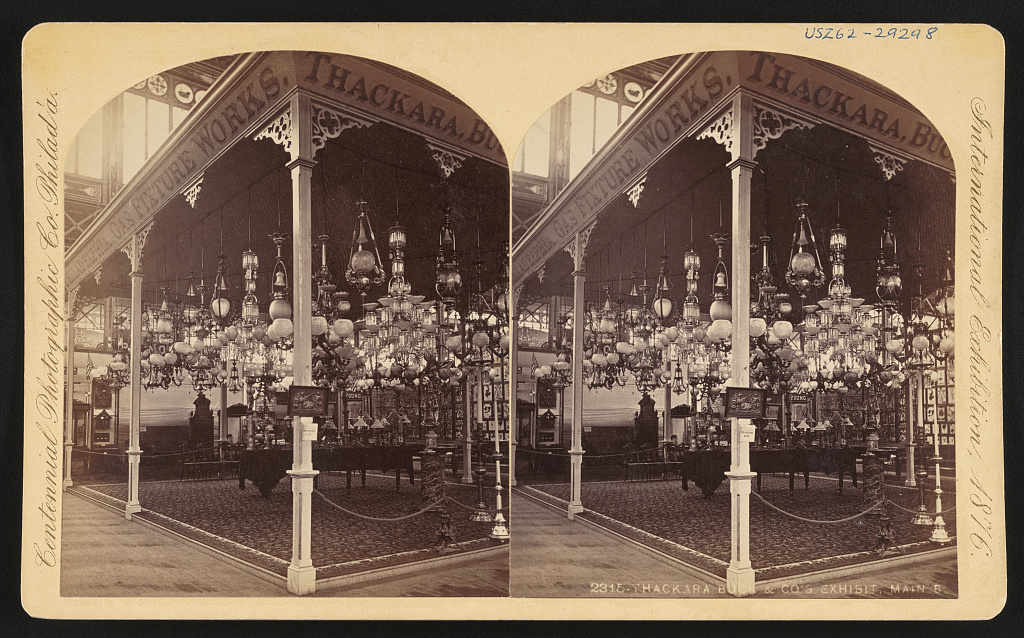 |
| Display of lighting fixtures by Thackara, Bull & Co. at Centennial Exposition, Philadelphia, Pennsylvania 1876 |
 |
| Display of Japanese bronzes at Centennial Exposition, Philadelphia, Pennsylvania 1876 |
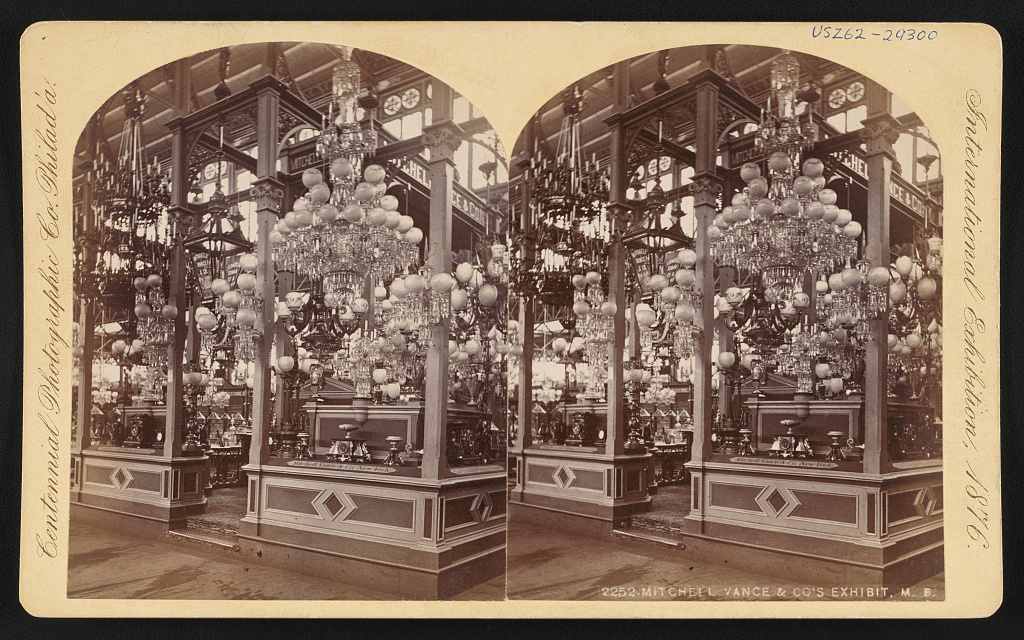 |
| Display of lighting fixtures by Mitchell Vance & Co. at Centennial Exposition, Philadelphia, Pennsylvania 1876 |
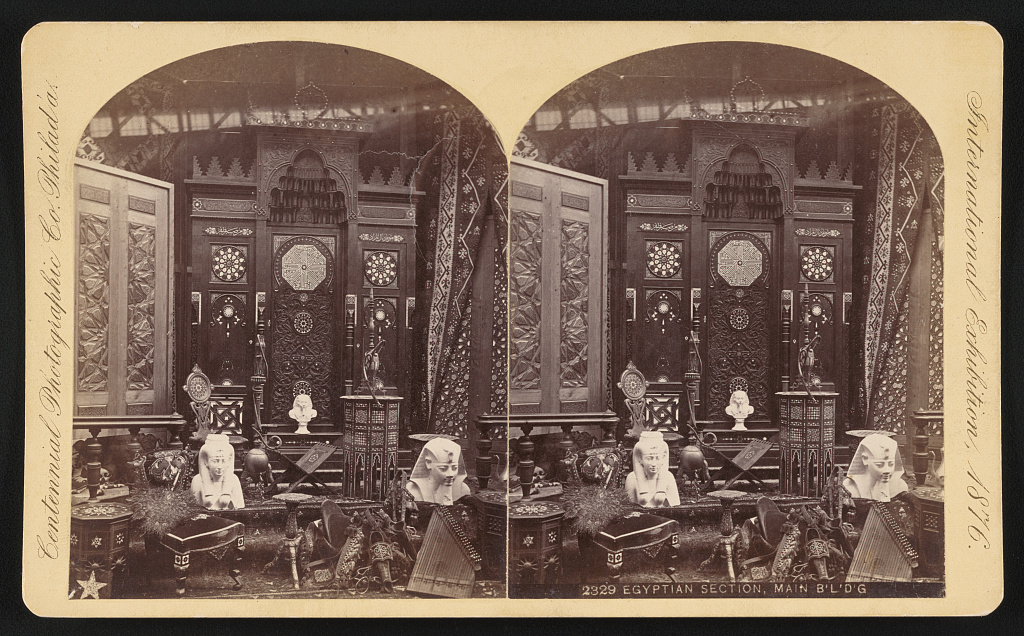 |
| Display of Egyptian materials at Centennial Exposition, Philadelphia, Pennsylvania 1876 |
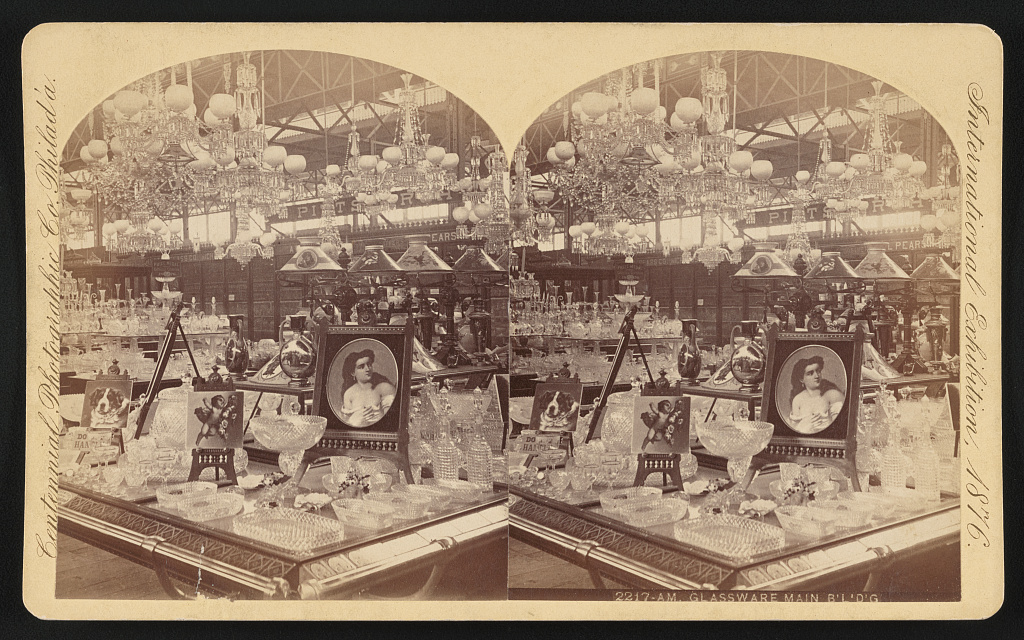 |
| Display of American Glassware at Centennial Exposition, Philadelphia, Pennsylvania 1876 |
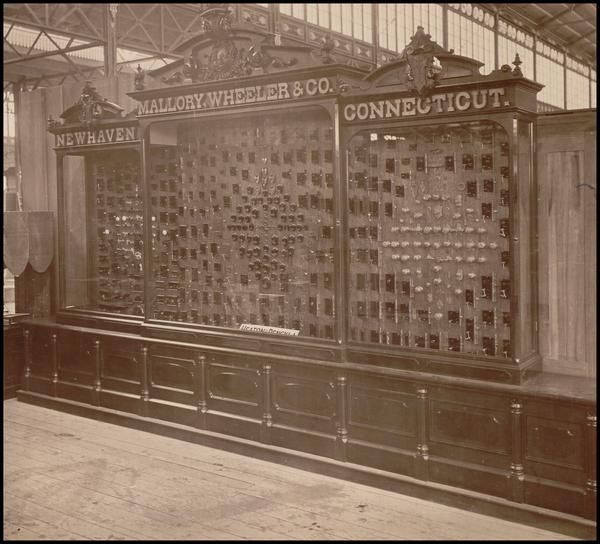 |
| Display of Hardware by Mallory & Wheeler at Centennial Exposition, Philadelphia, Pennsylvania 1876 |
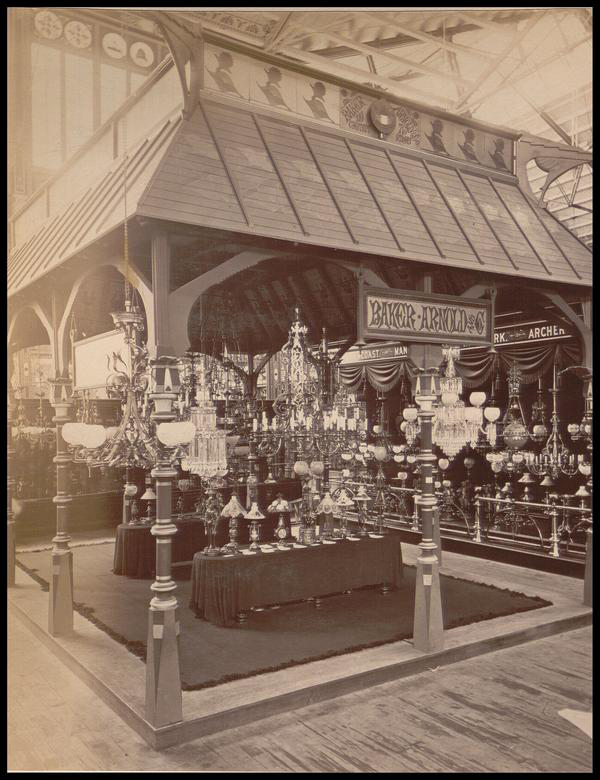 |
| Display of Lighting by Baker, Arnold & Co. at Centennial Exposition, Philadelphia, Pennsylvania 1876 |
The Centennial Exposition of 1876, officially known as the International Exhibition of Arts, Manufactures, and Products of the Soil and Mine, was held in Philadelphia, Pennsylvania, to celebrate the 100th anniversary of the signing of the Declaration of Independence. It was one of the first world's fairs held in the United States and showcased the country's progress and achievements since its founding. The exposition had a profound impact on American society and culture, fostering a sense of national pride and showcasing the country's industrial and technological achievements on a global stage.
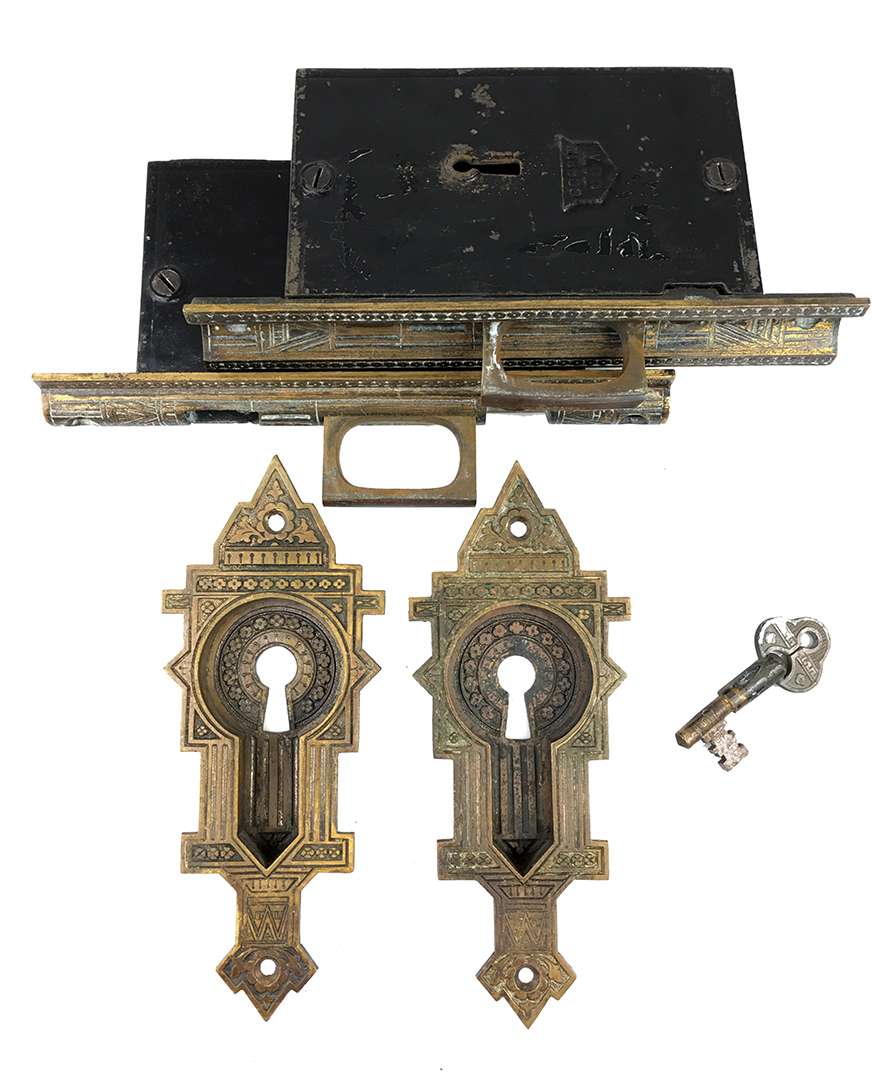
Many significant technological innovations were first introduced to the American public at the Centennial Exposition, including the telephone by Alexander Graham Bell, the Corliss steam engine, and various new types of machinery. The Aesthetic Movement was on full display in the exhibits at the exposition, with elaborate door hardware, intricate light fixtures, and decorative metalwork showcasing the possibilities of combining functionality with aesthetic appeal.
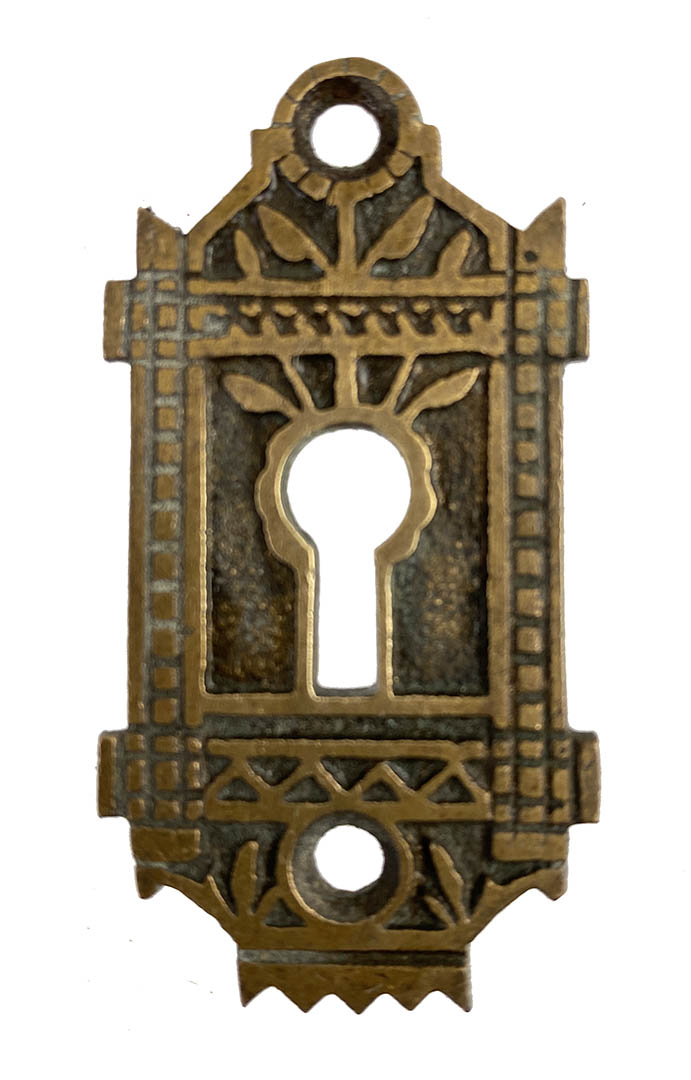
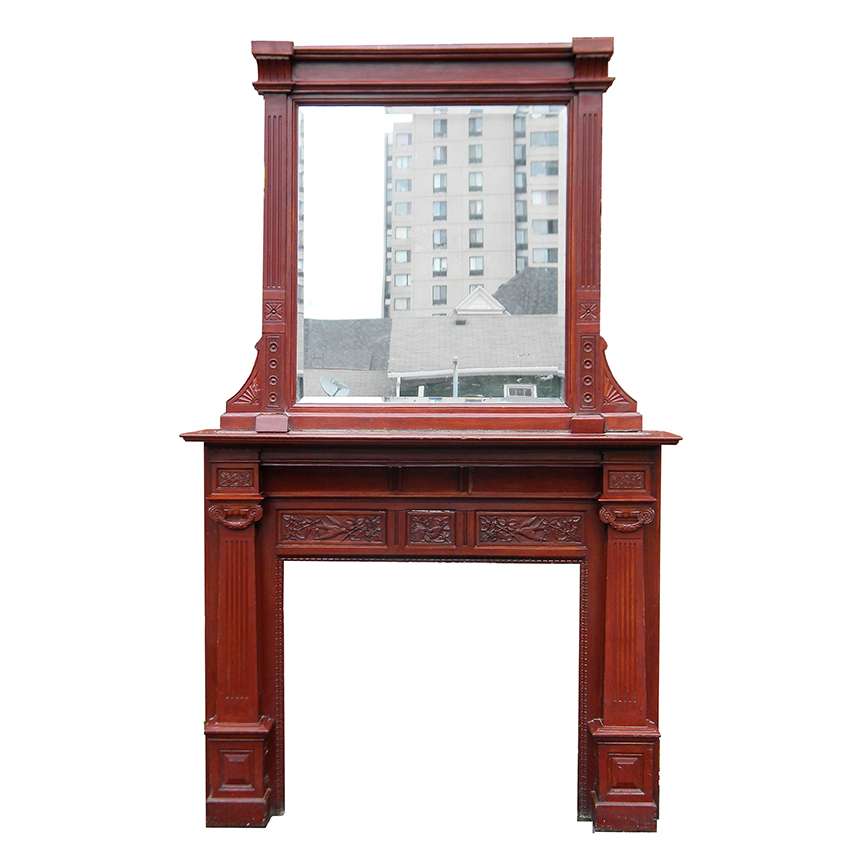
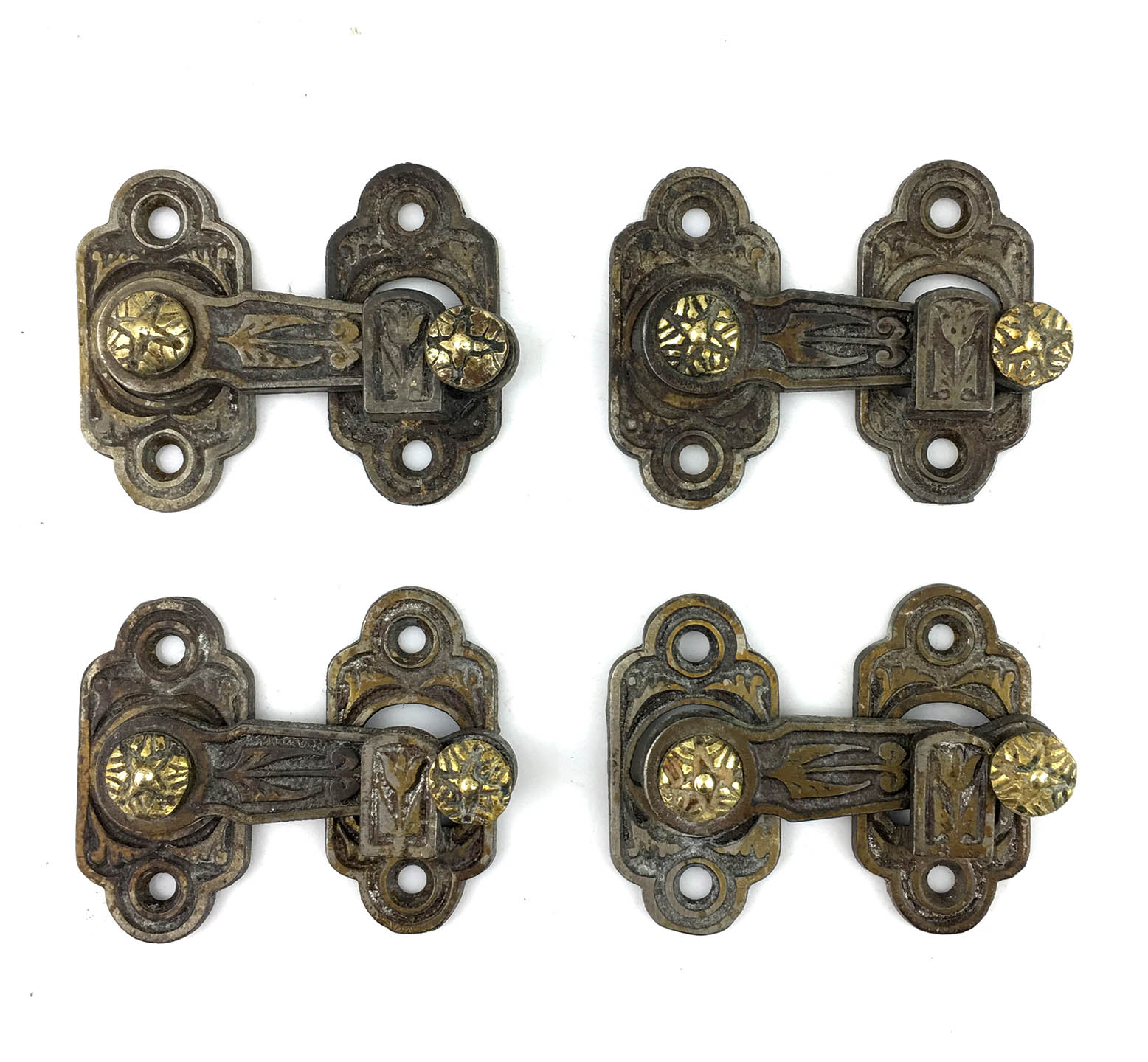
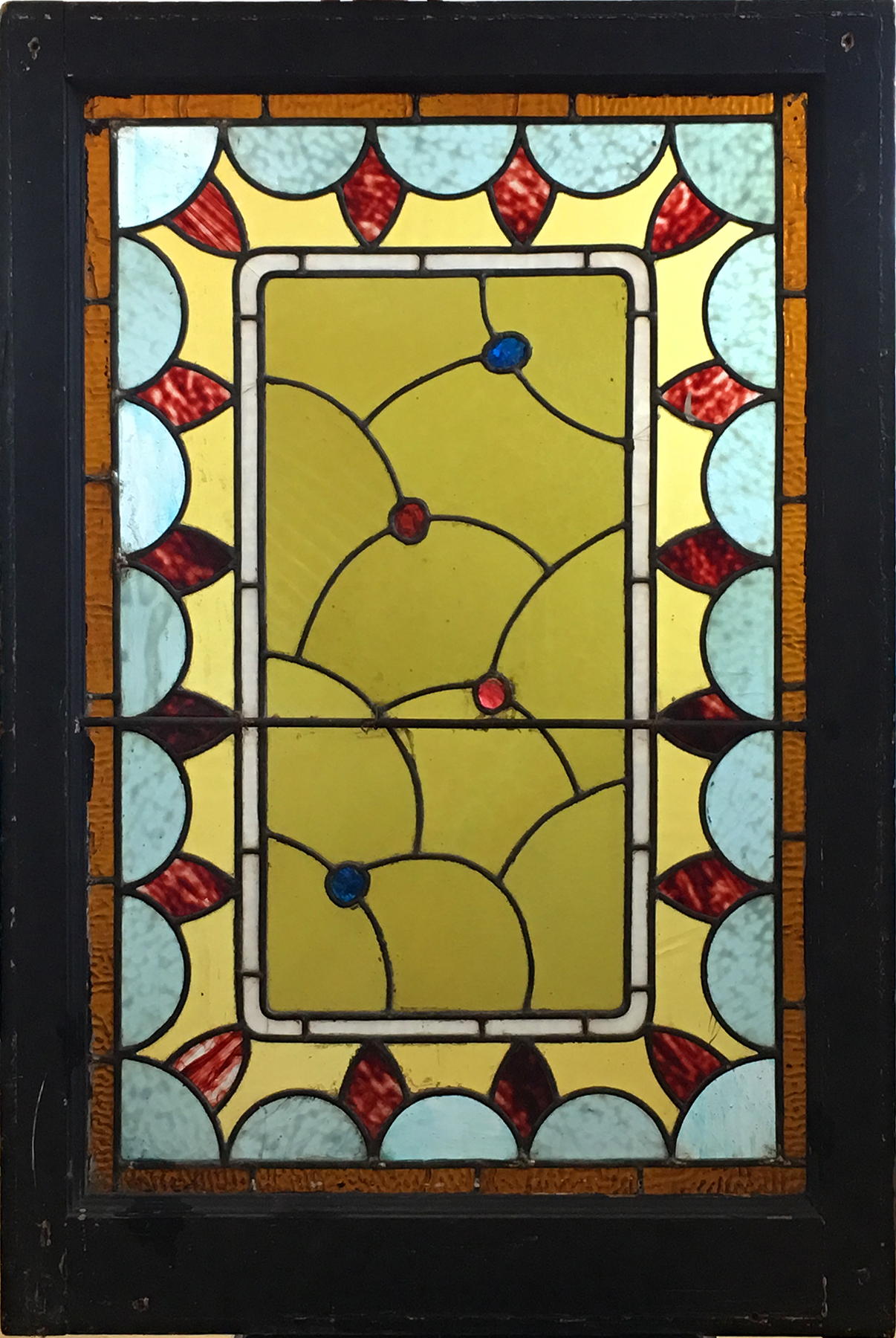
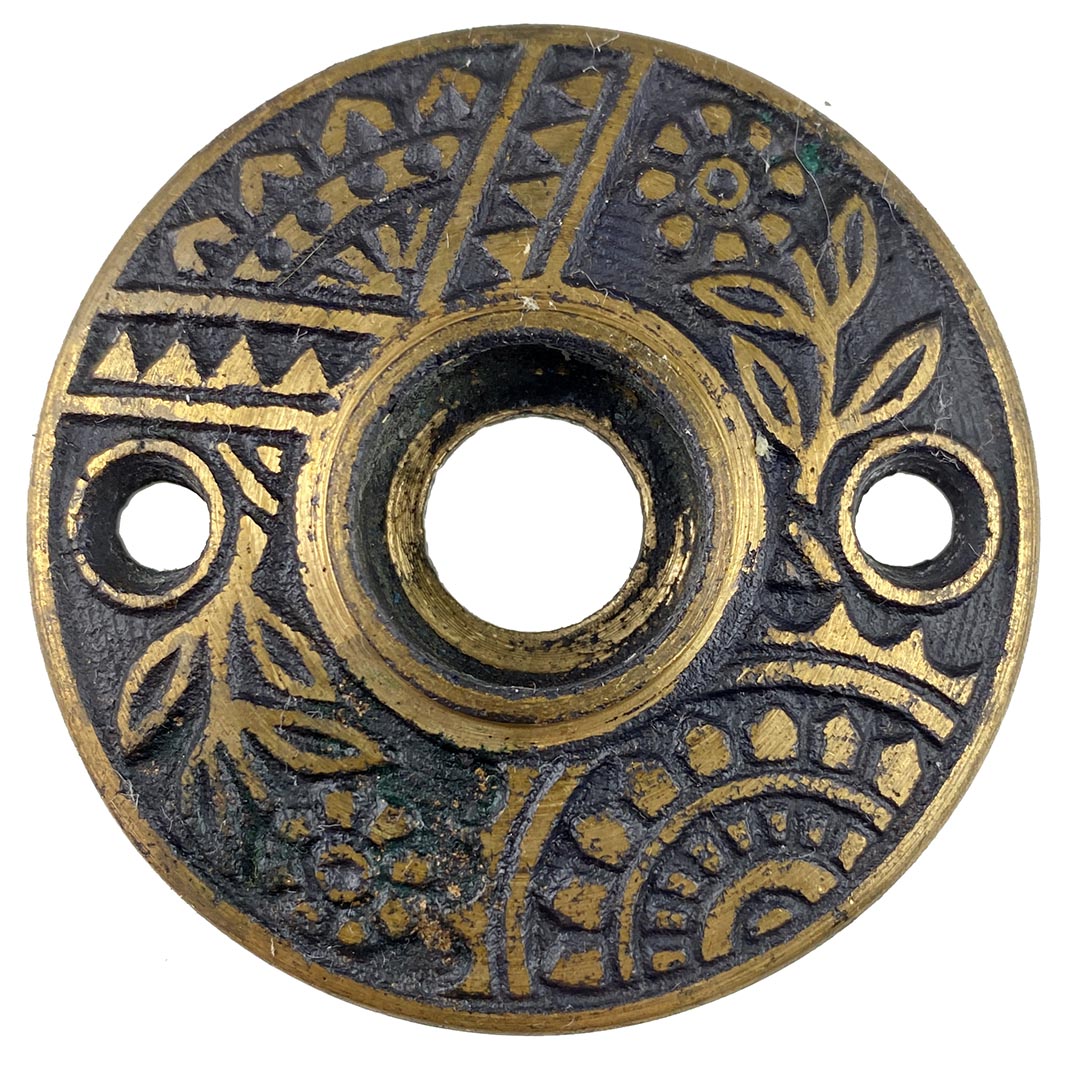
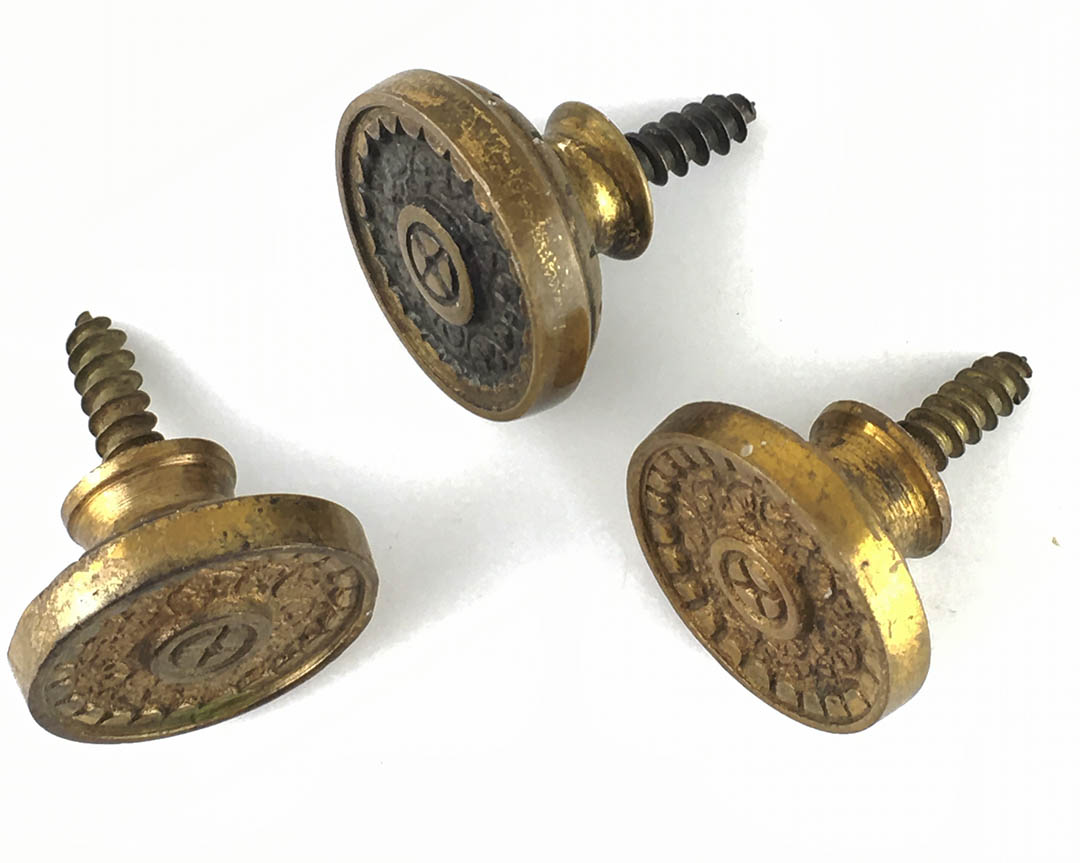
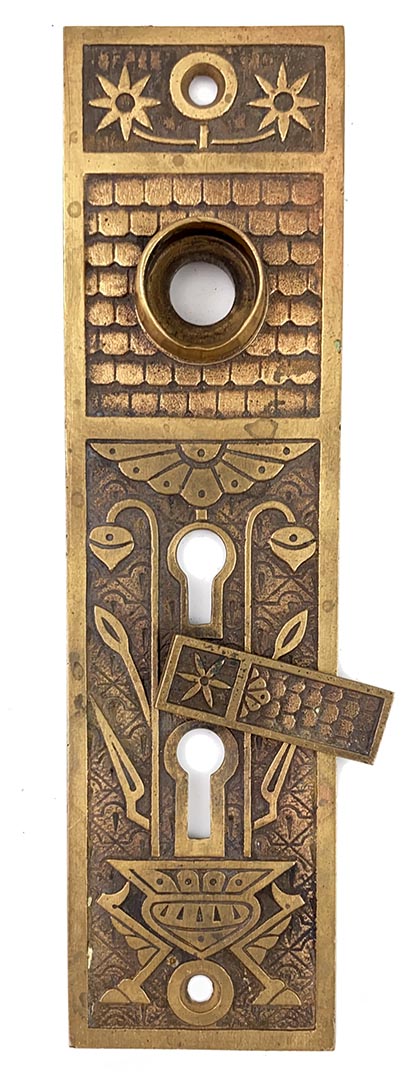
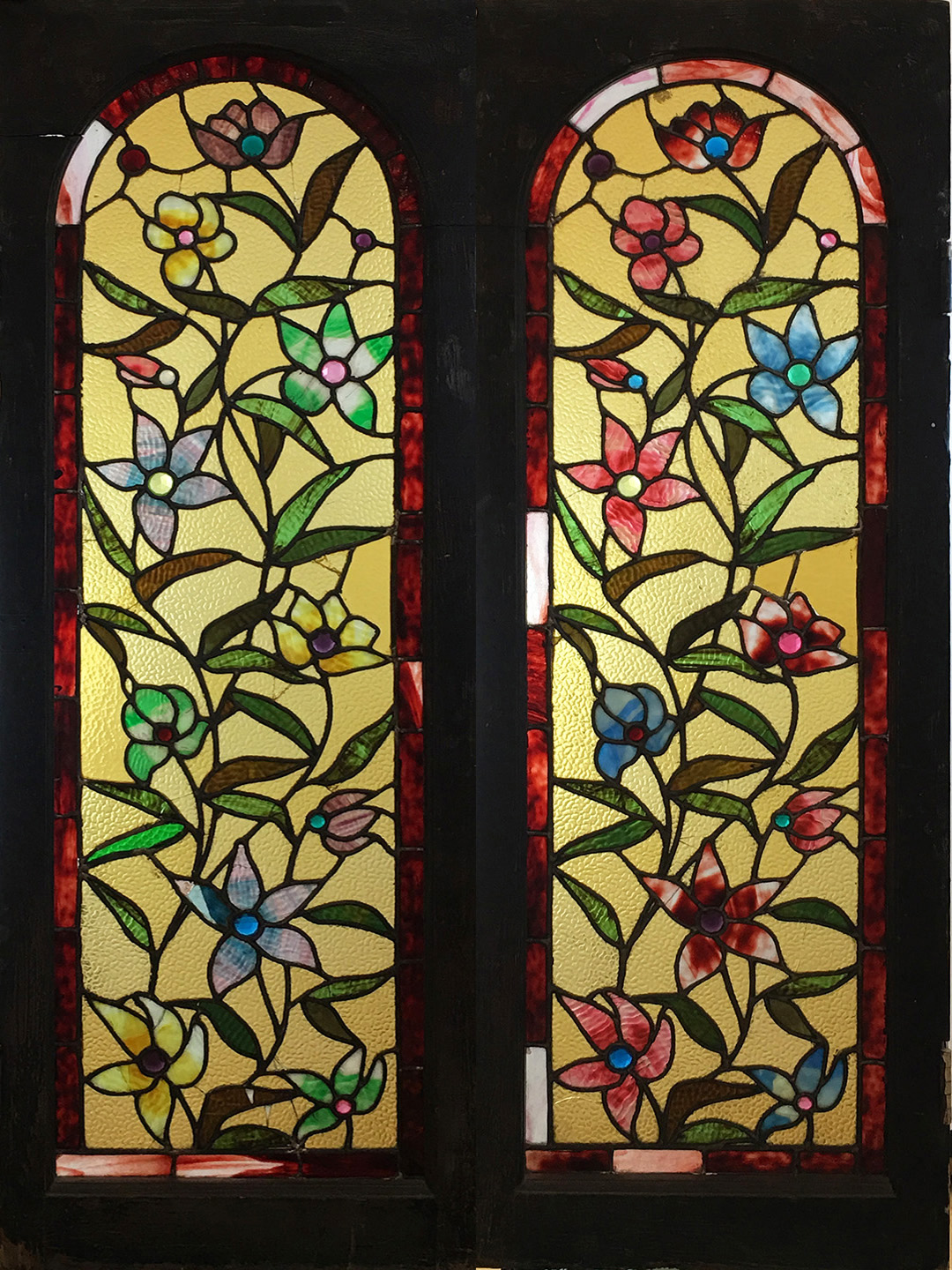
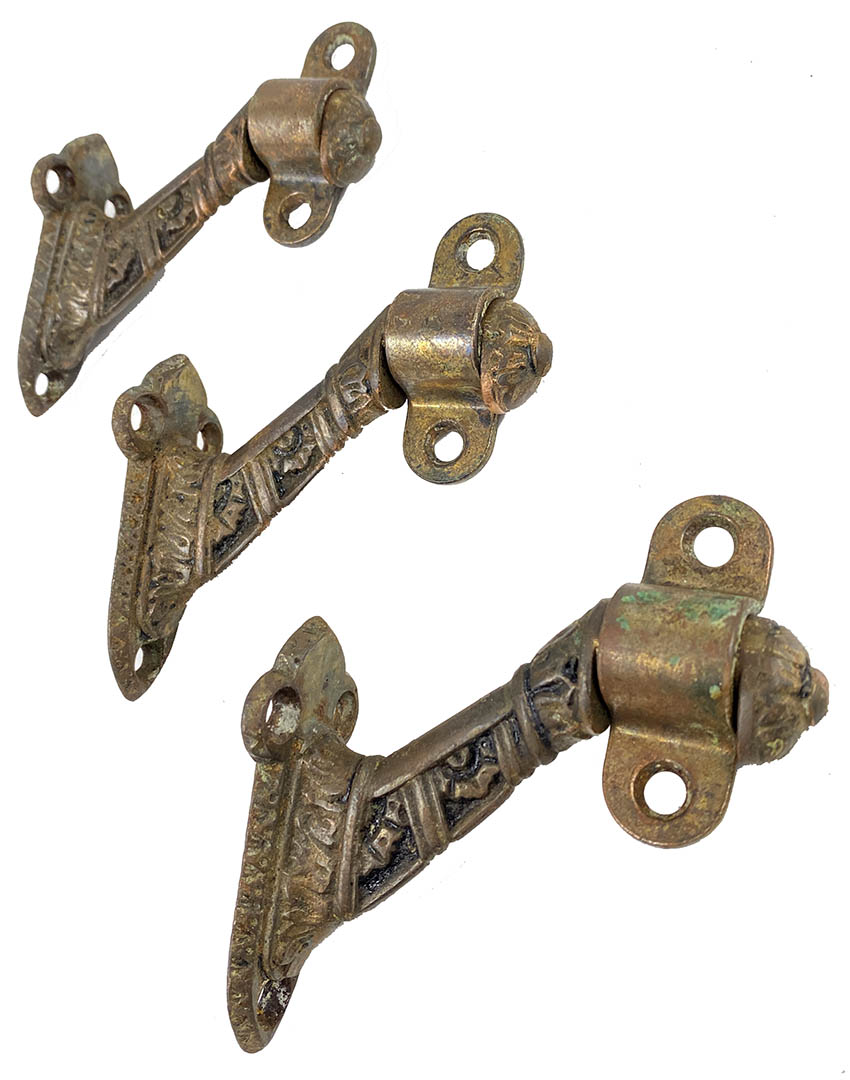
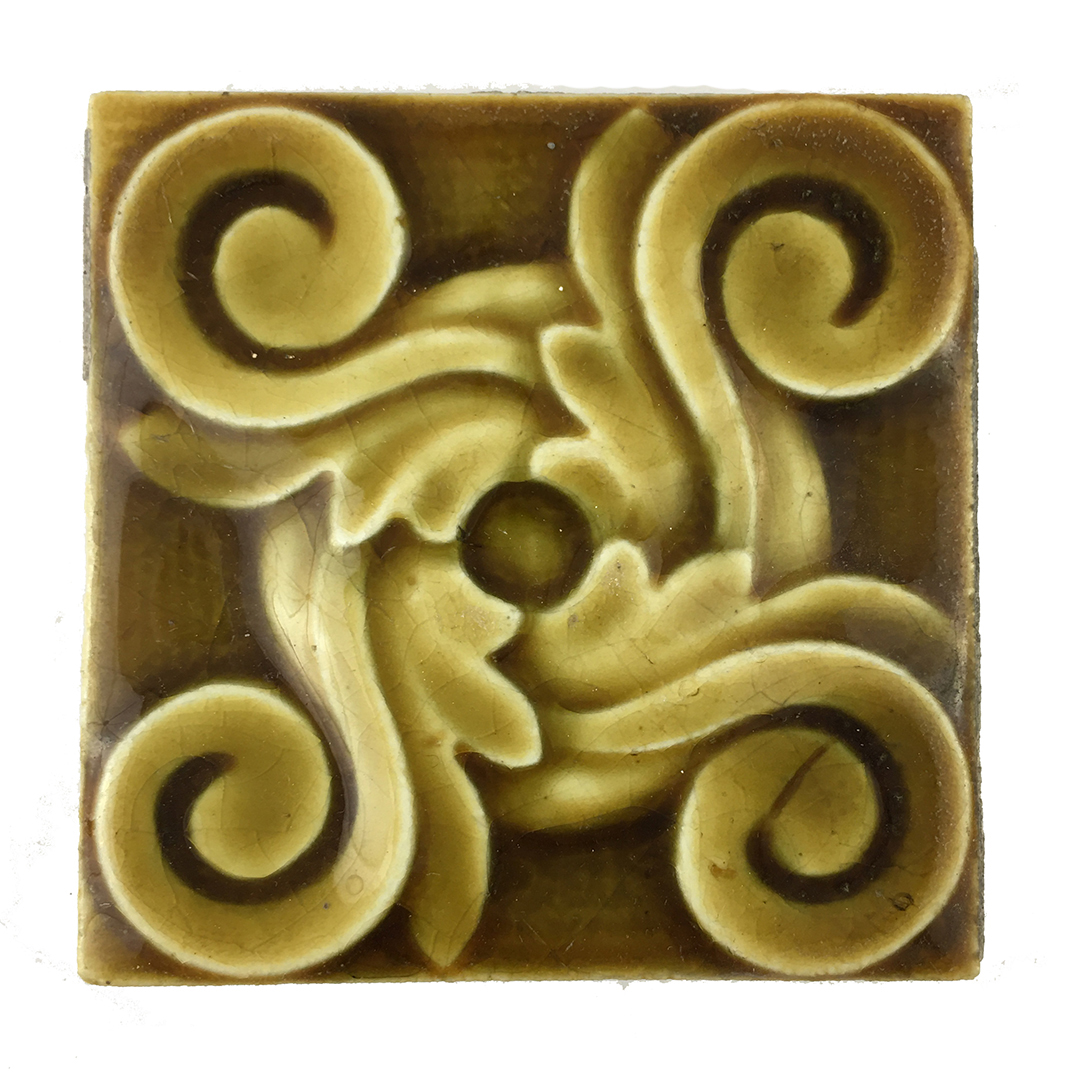
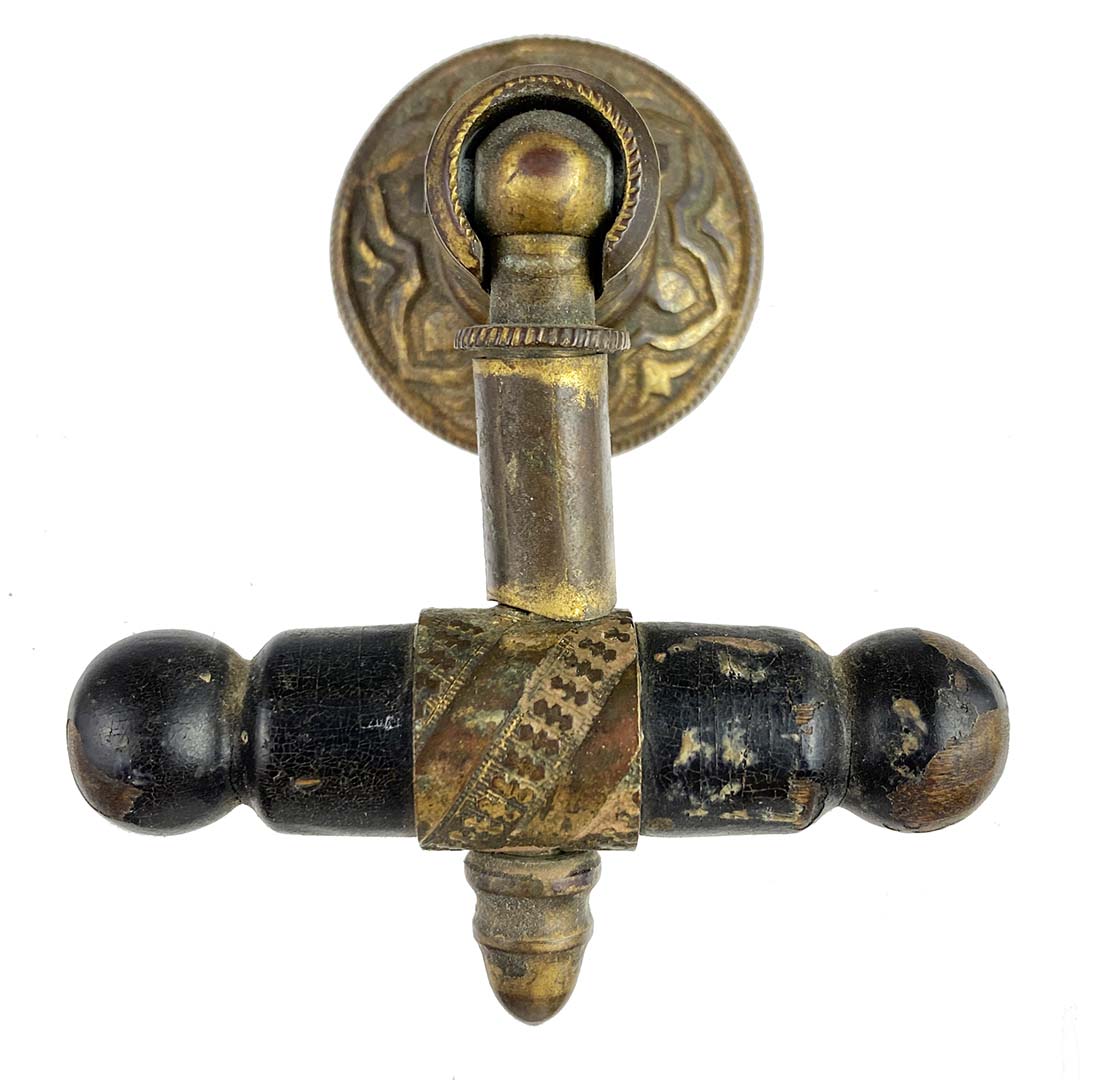
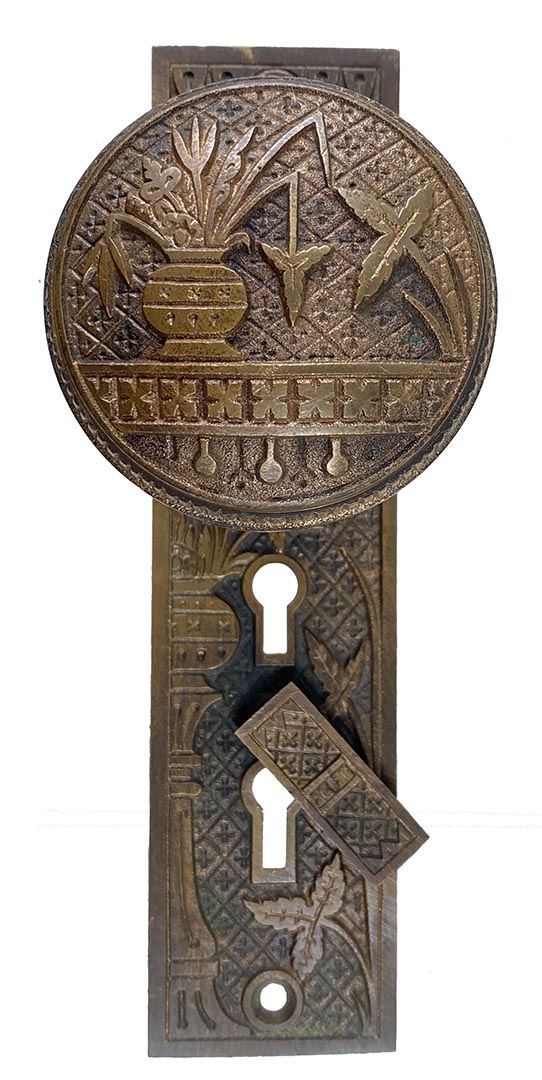
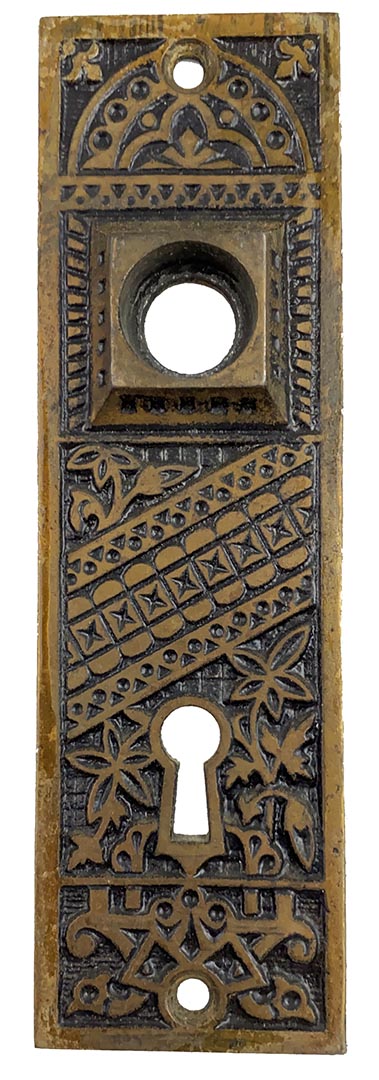
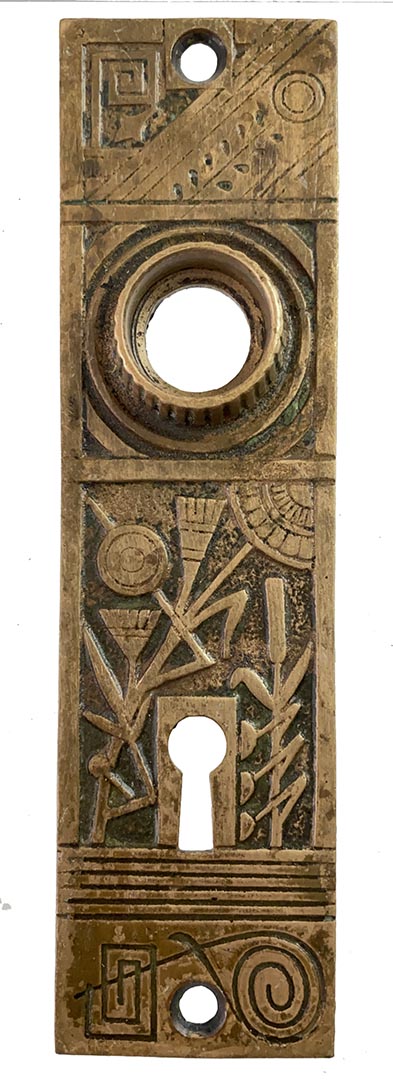
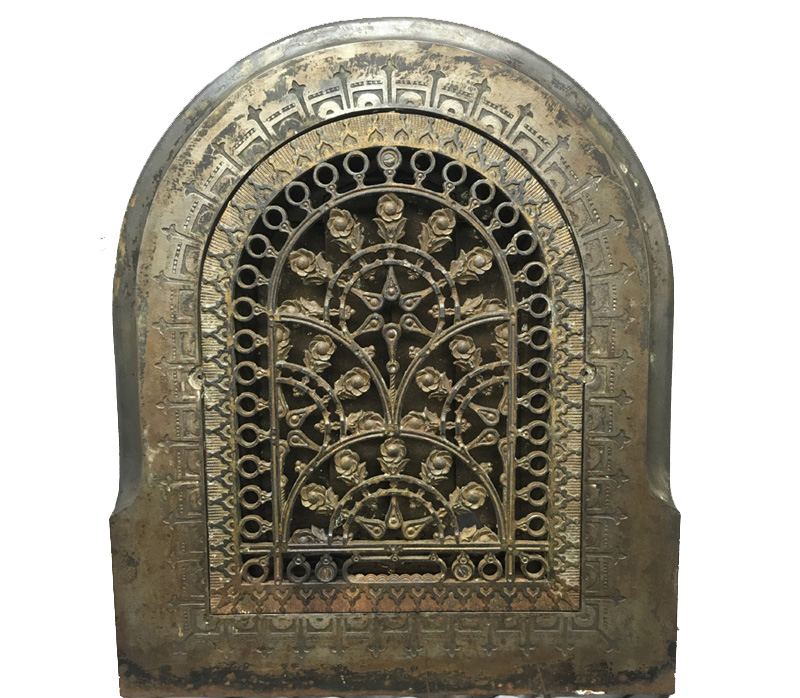
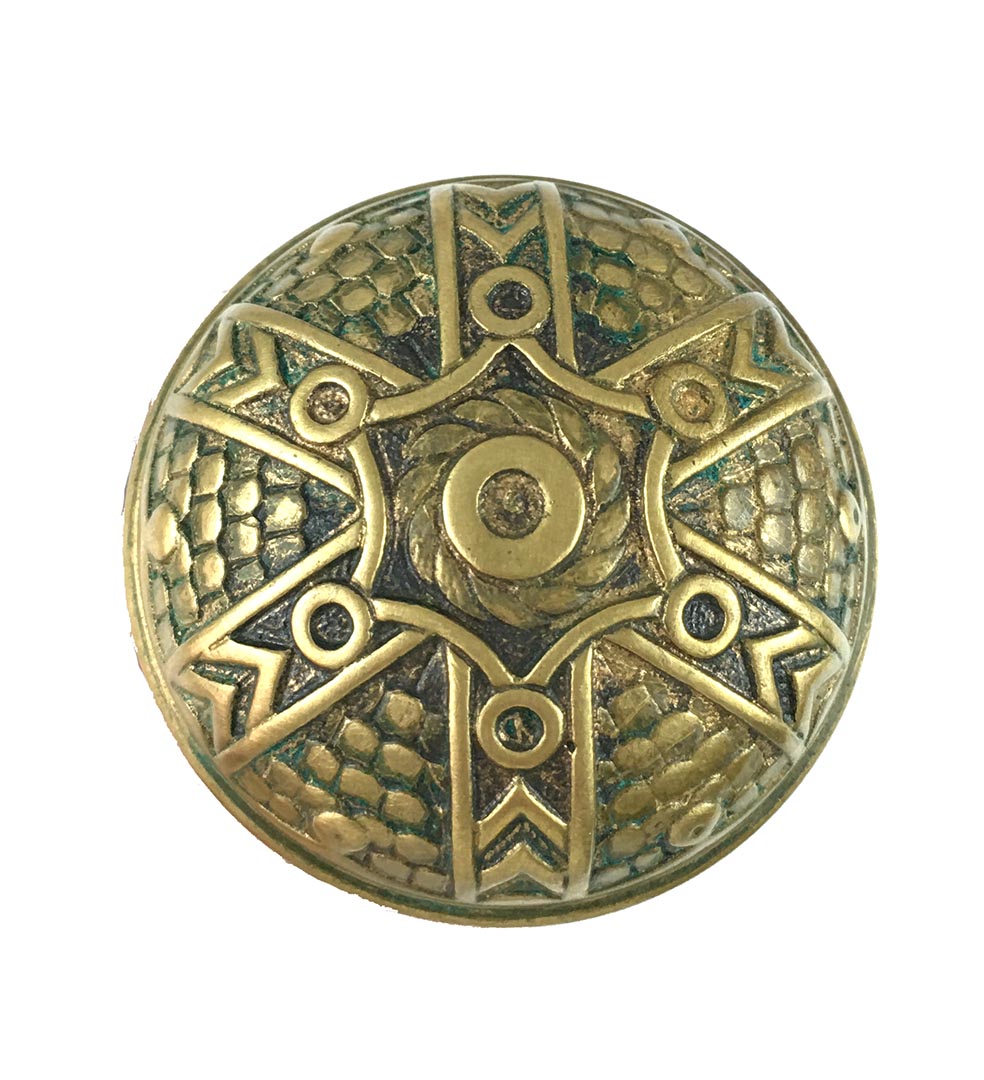
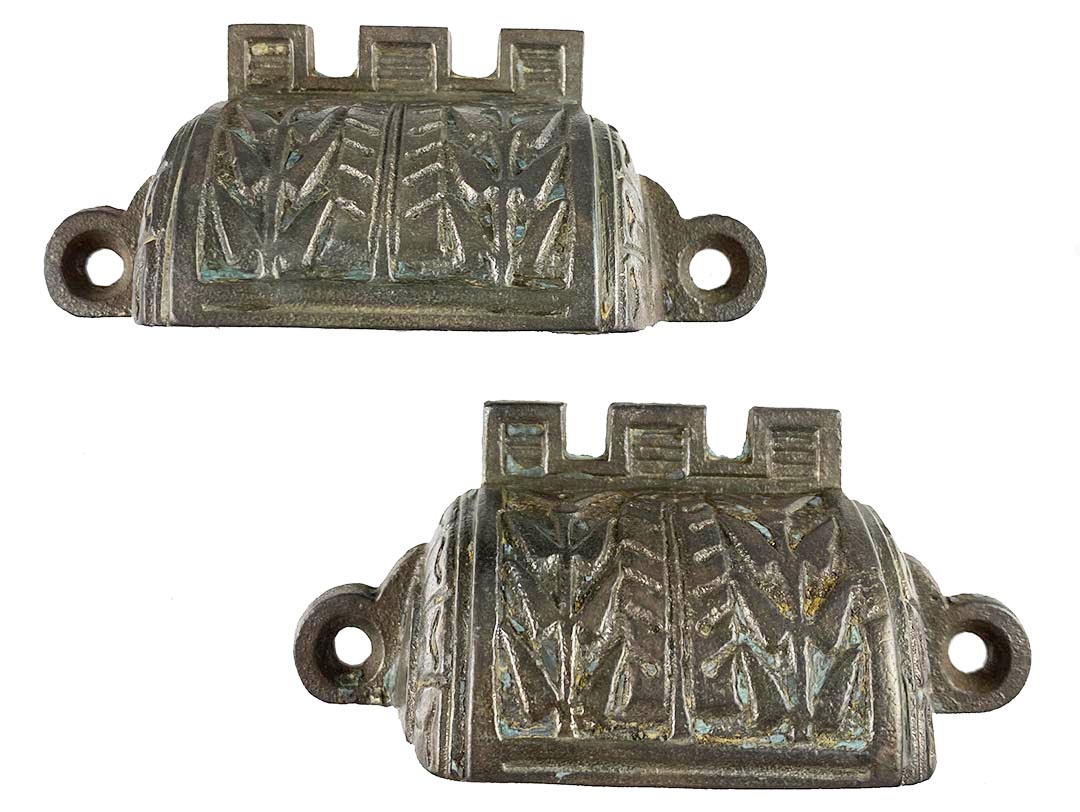
While many items are described as “Aesthetic style” on various online sites, true Aesthetic styled pieces can be easily identified by the distinctive style of the design elements used. To identify an actual Aesthetic Movement piece, here is what to look for. Design elements that embody the Aesthetic Movement are:
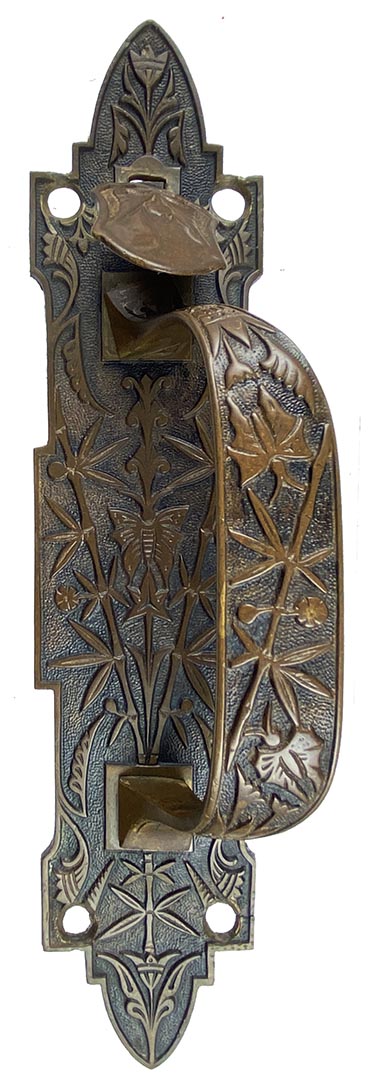
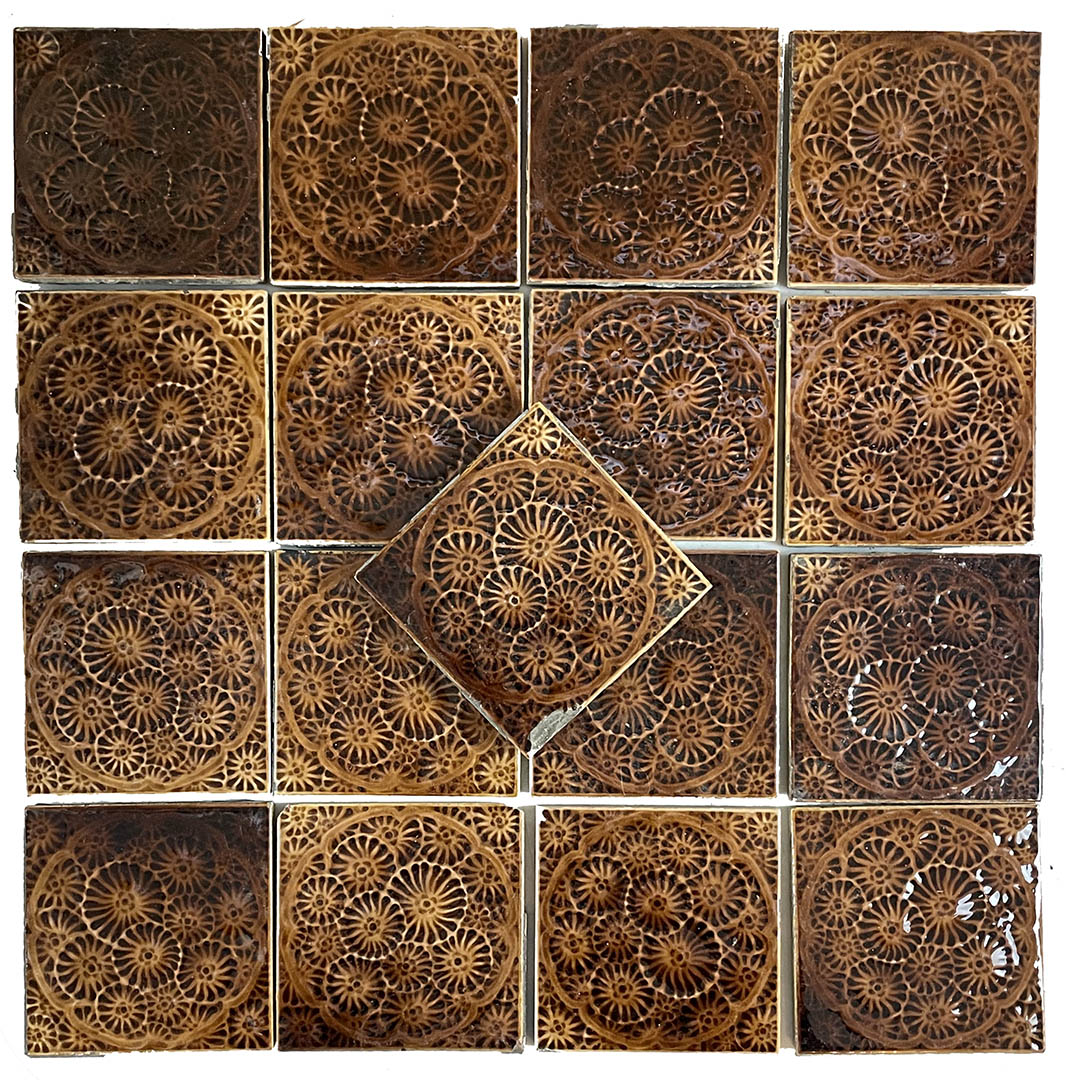
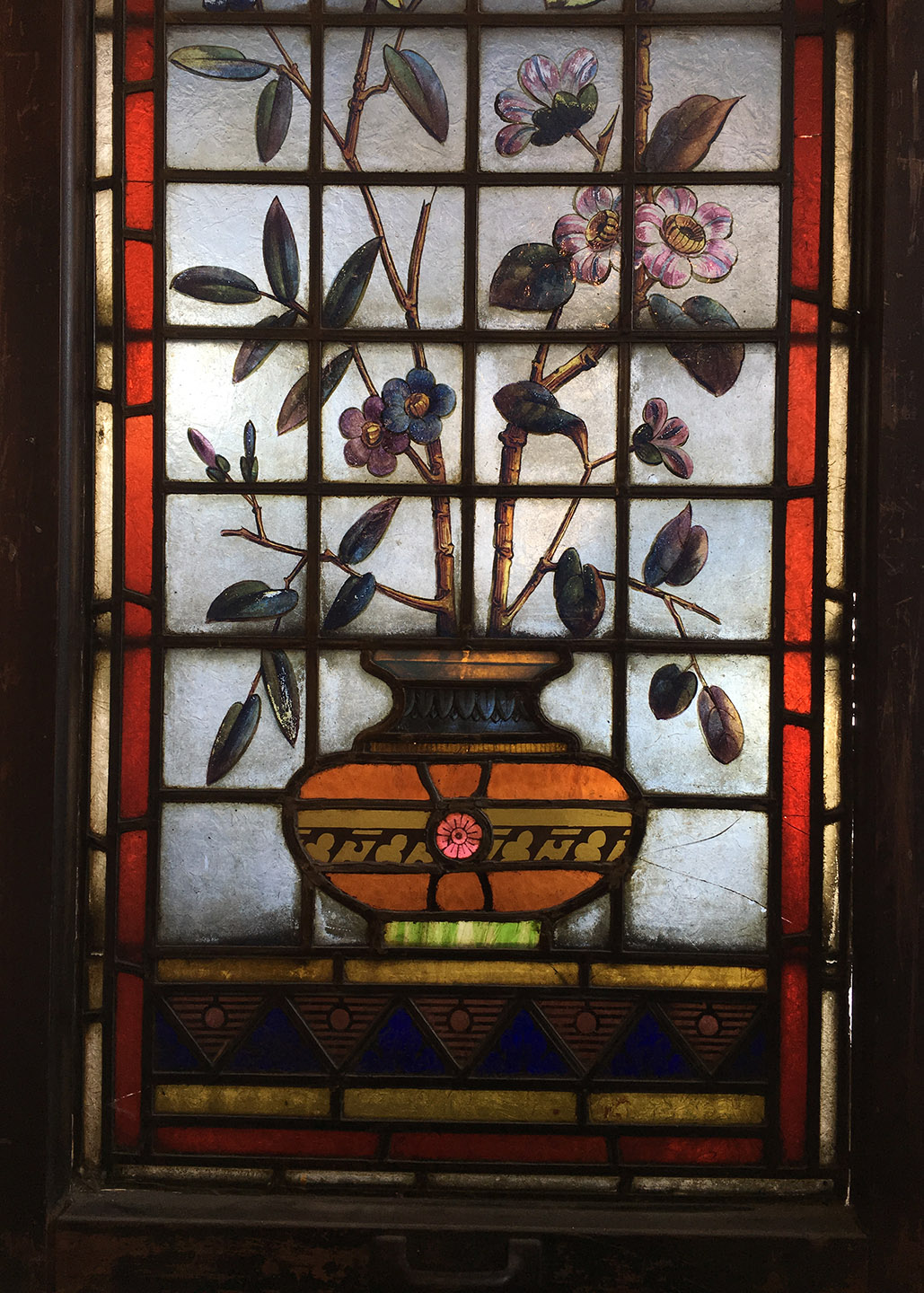
Celebration of the Beauty of Nature: Floral and botanical motifs are a common theme. Flowers like peonies, sunflowers, and lilies were popular, and designers drew inspiration from organic forms found in nature to create stylized and decorative patterns. Birds and butterflies were often incorporated into designs.
Influence of Japanese Art: The Aesthetic Movement drew inspiration from Japanese art and design, which was introduced to the West through trade and exhibitions. Japanese aesthetics, characterized by simplicity, asymmetry, and a focus on natural forms like bamboo, cherry blossoms, carp, pagodas, cranes, and Geishas, greatly influenced the movement's visual style.
Whiplash Curve and Flowing Lines: Aesthetic design favored flowing, sinuous lines known as the "whiplash curve," which contrasted sharply with the more rigid and structured lines of Victorian design. These flowing lines created a sense of movement and grace in furniture, metalwork, and decorative arts.
Rich Colors and Luxurious Materials: Aesthetic design often used rich, vibrant colors such as deep blues, greens, purples, and golds. These colors were complemented by luxurious materials such as exotic woods, mother-of-pearl, ivory, and finely crafted metals like brass and copper.
Attention to Craftsmanship: Central to the Aesthetic Movement was a focus on craftsmanship and quality. Artisans and designers placed great emphasis on the skillful execution of decorative arts, whether in furniture making, ceramics, stained glass, or metalwork. Handcrafted details and intricate ornamentation were highly valued.
Asymmetry and Balance: Unlike the symmetrical balance of earlier Victorian design, Aesthetic design often featured asymmetrical arrangements that emphasized visual interest and complexity.
Overall, the Aesthetic Movement represented a departure from the strict formalism of Victorian design, advocating for a more artistic, expressive, and harmonious approach to interior decoration and the decorative arts. It influenced not only design trends of its time but also laid the foundation for modern movements that prioritize beauty, craftsmanship, and the integration of art into everyday life.
 |  |  |
 |  |  |
 |  |  |
 |  |  |
 |  |  |
 |  |  |
 |  |  |
 |  |  |
 |  |  |
 |  |  |
 |  |  |
Posted on Categories :
Antique Items,
Antique Bath Items,
Antique & Vintage Books,
Antique Cabinets,
Antique Doors,
Antique Cabinet Doors,
Antique Exterior Doors,
Antique French Doors,
Antique Interior Doors,
Antique Pocket Doors,
Antique Fireplaces,
Antique Fireplace Andirons & Tools,
Antique Fireplace Backs, Grates & Inserts,
Antique Fireplace Covers & Surrounds,
Antique Fireplace Mantels,
Antique Fireplace Tile,
Antique Furnishings,
Antique Garden,
Antique Hardware,
Antique Bin Style Drawer Pulls,
Antique Cabinet & Furniture Locks,
Antique Cabinet Hinges,
Antique Cabinet Keyhole Covers,
Antique Cabinet Knobs,
Antique Cabinet Latches,
Antique Casters and Paw Feet,
Antique Coat & Bath Hooks,
Antique Curtain Hardware,
Antique Door Hardware,
Antique Padlocks,
Antique Dead Bolts & Night Latches,
Antique Chicago Niles Door Hardware,
Antique Door Bells,
Antique Door Bolts,
Antique Door Hinges,
Antique Door Knobs,
Antique Door Knockers,
Antique Door Plates,
Antique Door Pulls & Push Plates,
Antique Door Rosettes,
Antique Door Sets,
Antique Door Stops & Holders
Comments